Back to Hackathons
hybrid EVENTAll Levels LEVELcompleted
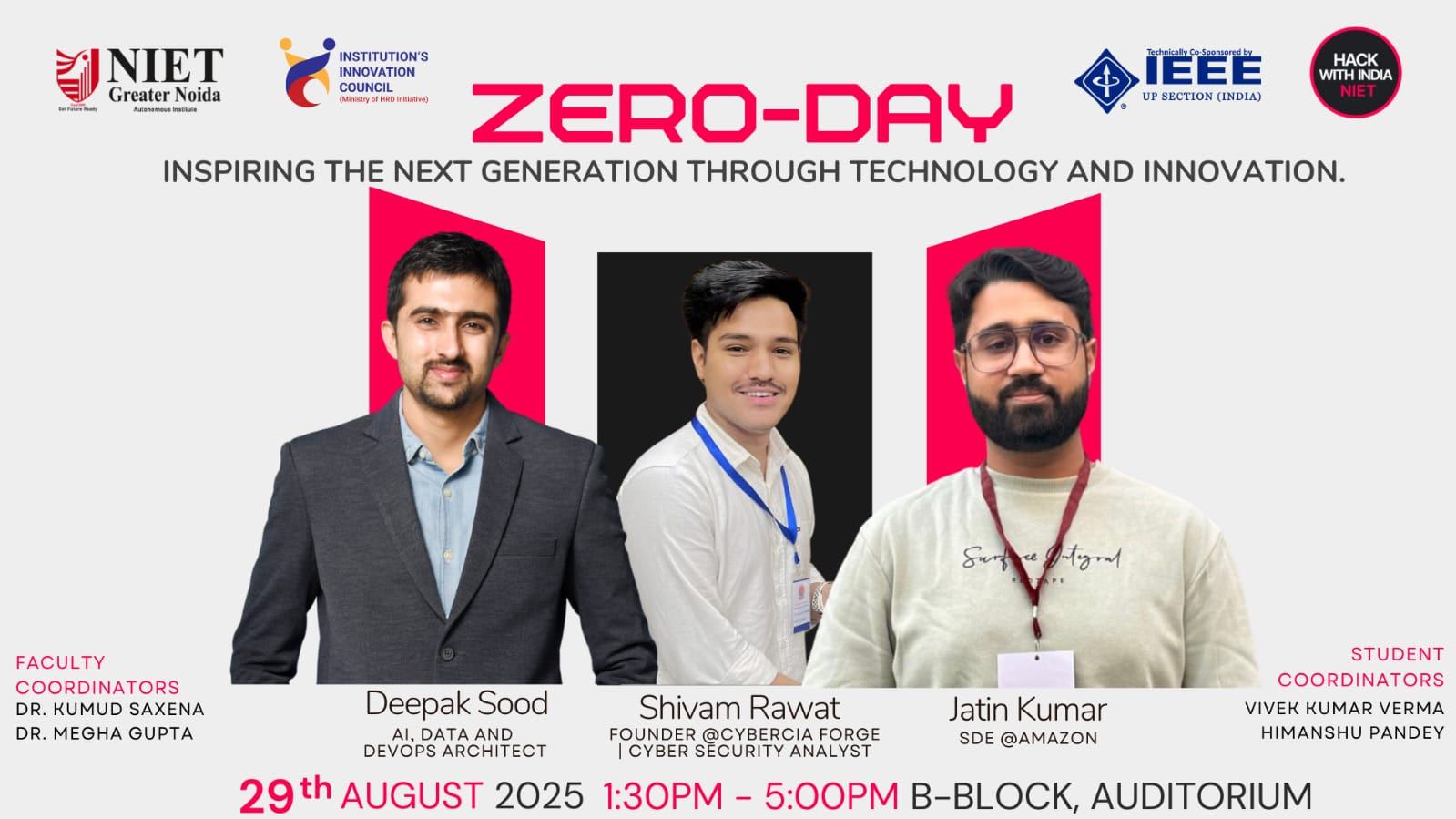
ZERO-DAY
"Build the Future of Artificial Intelligence"
Timeline
Jan 7 - Jan 22, 26
Deployment
NIET
Team Bounds
1-4 Devs
Mission Overview
Scope & Guidelines Dossier
ZERO-DAY is a national-level hybrid hackathon organized by NX-913, bringing together innovative minds from across the country to build cutting-edge solutions powered by Artificial Intelligence. Over the course of the hackathon, participants will collaborate, ideate, and develop real-world AI-driven projects that address modern challenges across domains such as healthcare, education, sustainability, automation, and smart systems. ZERO-DAY aims to foster innovation, hands-on learning, and problem-solving while providing participants with mentorship, exposure, and the opportunity to showcase their skills on a national platform.
Stream Sectors
#OPEN INNOVATION
Problem Statements
Design Targets & Directives
NX-AI-001: AI for Smart Healthcare Assistance
Develop an AI-powered solution that enhances healthcare accessibility, diagnosis, or patient monitoring. The system should leverage Artificial Intelligence technologies such as Machine Learning, Computer Vision, or Natural Language Processing to assist doctors, patients, or healthcare institutions. The solution should clearly define the healthcare problem being addressed and demonstrate innovation, feasibility, and ethical AI usage. The goal is to improve efficiency, accuracy, and overall quality of healthcare services.
NX-AI-002: AI for Sustainable & Smart Cities
Build an AI-driven solution to solve challenges faced by modern cities such as traffic congestion, waste management, pollution control, energy optimization, or public safety. Participants are encouraged to use data-driven intelligence, predictive analytics, or automation to create scalable and sustainable smart city solutions that improve urban living and resource utilization.
NX-AI-003: AI for Personalized Education & Learning
Design an AI-based platform that personalizes learning experiences based on individual learner needs, performance, and behavior. The solution may assist students, educators, or institutions by adapting content, assessments, or learning paths. The project should focus on improving engagement, accessibility, and learning outcomes through intelligent and adaptive education systems.
NX-AI-004: AI for Cybersecurity & Fraud Detection
Create an AI-powered solution capable of detecting, predicting, or preventing cybersecurity threats and fraudulent activities. The system may focus on financial fraud, phishing detection, identity theft, or intrusion detection. Innovative use of AI techniques such as anomaly detection, behavioral analysis, or pattern recognition is encouraged to enhance digital security and trust.
Mission Phases
Timeline logs & gates
Phase 11/12/2026 - 1/20/2026
Ideation & Registration
Phase 21/21/2026 - 1/22/2026
Development Phase
Phase 31/23/2026 - 1/23/2026
Final Submission & Evaluation
Operations Itinerary
04:30 AM
Hackathon Kickoff & Problem Briefing
submissionMission Apply
StatusEnded
Assemble team members or join solo post registration.
2
Roster Teams
TBA
Bounty Pool
Submission Checklist
- GitHub Repository
- Demo Video Link
- Project Documentation (PDF)
- Full Written Overview
Jury Panel
N
NexusV
VivekD
DonotrytocatchFeatured Speakers
T
To Be AnnouncedT
To Be AnnouncedT
To Be AnnouncedUplink Sponsors
NX-913
Community Partner
Bounty PoolTBA